If you’ve followed Miami real estate long enough, you’ve probably had this experience.
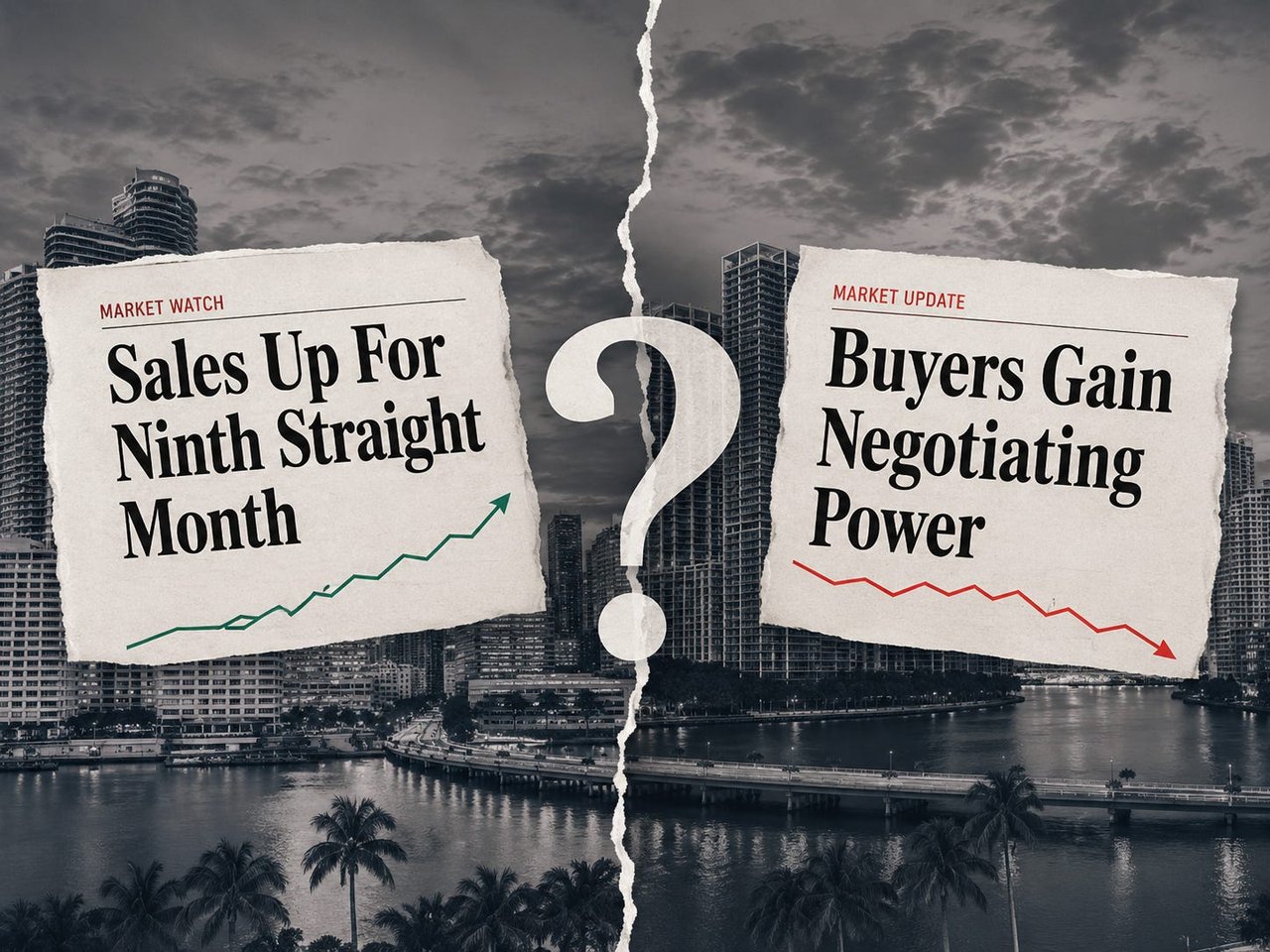
One headline tells you the market is on fire.
The next headline makes it sound like we’re headed for a slowdown.
This week was a perfect example.
One publication reported that Miami-Dade home sales increased for the ninth consecutive month. Another focused on rising
inventory, longer selling times, and buyers gaining negotiating power.
So which one is right?
Actually... both.
The difference isn’t in the numbers. It’s in what each article chooses to measure.
Demand and leverage are not the same thing.
The first article looks at sales volume.
Simply put, more homes sold than they did a year ago. Single-family homes were up. Condos were up. Luxury sales continued to perform well. International buyers remain active, and cash continues to play an important role in our market.
If that’s the only article you read, you’d probably conclude that Miami real estate remains incredibly strong.
And you’d be correct.
The second article looks at something completely different.
Instead of asking, “How many homes are selling?” it asks, “How much negotiating power do buyers have?”
Those are two completely different questions.
More inventory changes everything.
Over the past several years, buyers became accustomed to losing bidding wars, waiving contingencies, and making decisions within hours.
Today’s market feels different.
Inventory has increased across many price points, particularly in the condominium market. Buyers have more choices than they did just a year ago. Homes are taking longer to sell. Sellers are becoming more willing to negotiate.
None of that means demand has disappeared.
It simply means supply has started catching up.
That’s what a more balanced market looks like.
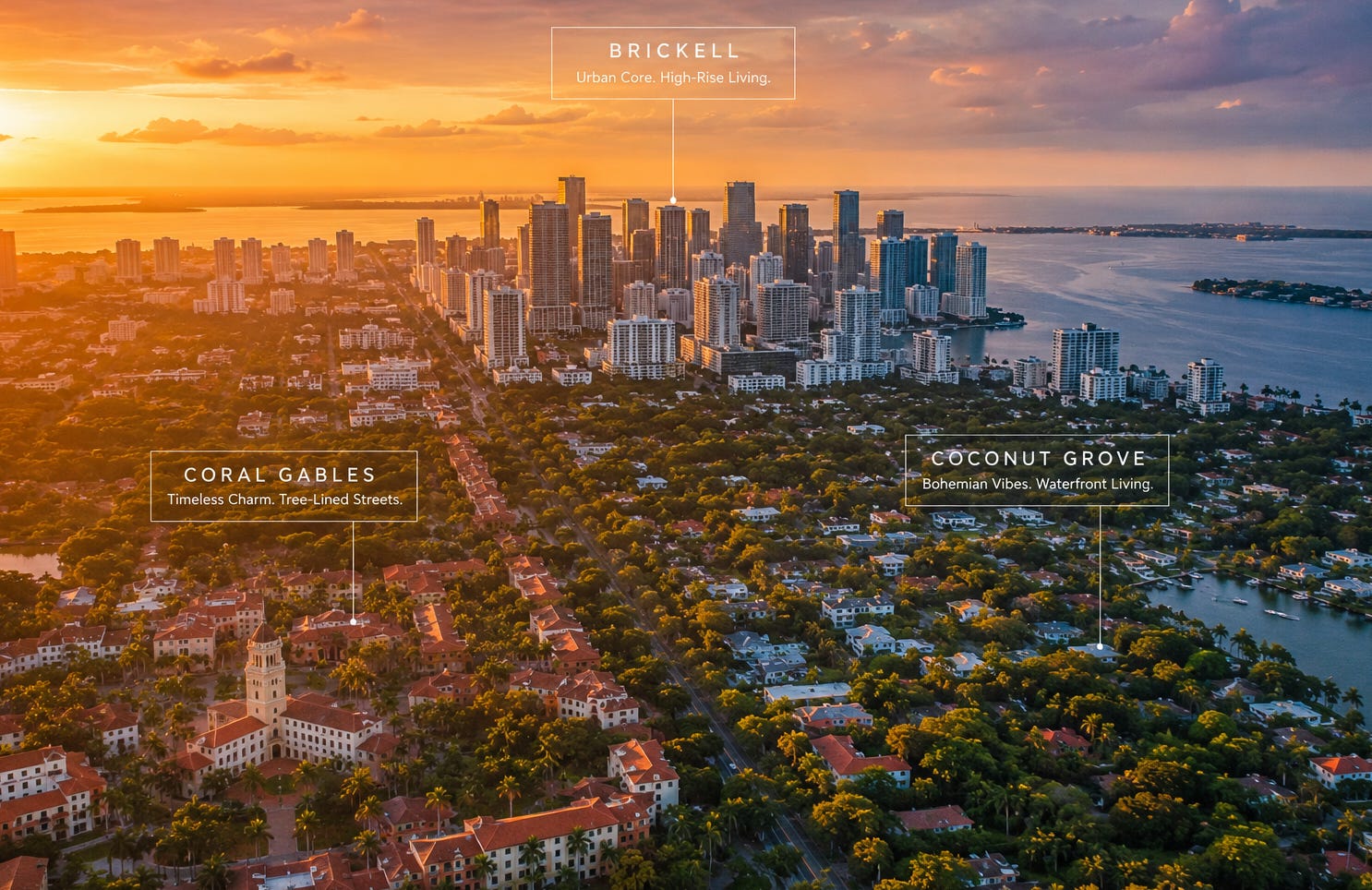
Miami isn’t one market.
This is probably the biggest mistake I see in national real estate coverage.
People talk about “the Miami market” as though every neighborhood behaves the same.
It doesn’t.
A waterfront estate in Coral Gables isn’t competing with a Brickell condominium.
A renovated home in Coconut Grove doesn’t behave like an aging condo facing large reserve requirements and special assessments.
They’re completely different markets serving different buyers.
That’s why broad headlines can be misleading.
The condo story deserves its own conversation.
If there’s one segment that has changed dramatically, it’s condos.
Between reserve funding requirements, insurance costs, inspections, and rising association fees, buyers have become much more selective.
That doesn’t mean condos aren’t selling.
They absolutely are.
But buyers are asking more questions, negotiating harder, and comparing more options before making a decision.
That’s healthy.
For years, speed often mattered more than diligence.
Today, buyers have room to do both.
Single-family homes continue telling a different story.
In many of the neighborhoods I work every day—including Coconut Grove and Coral Gables—well-priced single-family homes continue to attract strong interest.
Inventory remains relatively limited compared to buyer demand, especially for renovated homes in established neighborhoods with great schools, walkability, and long-term appeal.
Those properties still move.
Maybe not in a weekend like they occasionally did in 2021.
But quality continues to win.
So... who’s right?
Both articles are.
One measures demand.
The other measures negotiating conditions.
Those ideas can absolutely exist at the same time.
In fact, they’re exactly what we’re seeing today.
More buyers are purchasing homes than last year.
At the same time, buyers also have more leverage than they’ve had in several years.
Those aren’t contradictions.
They’re signs of a market that’s becoming more balanced.
My perspective
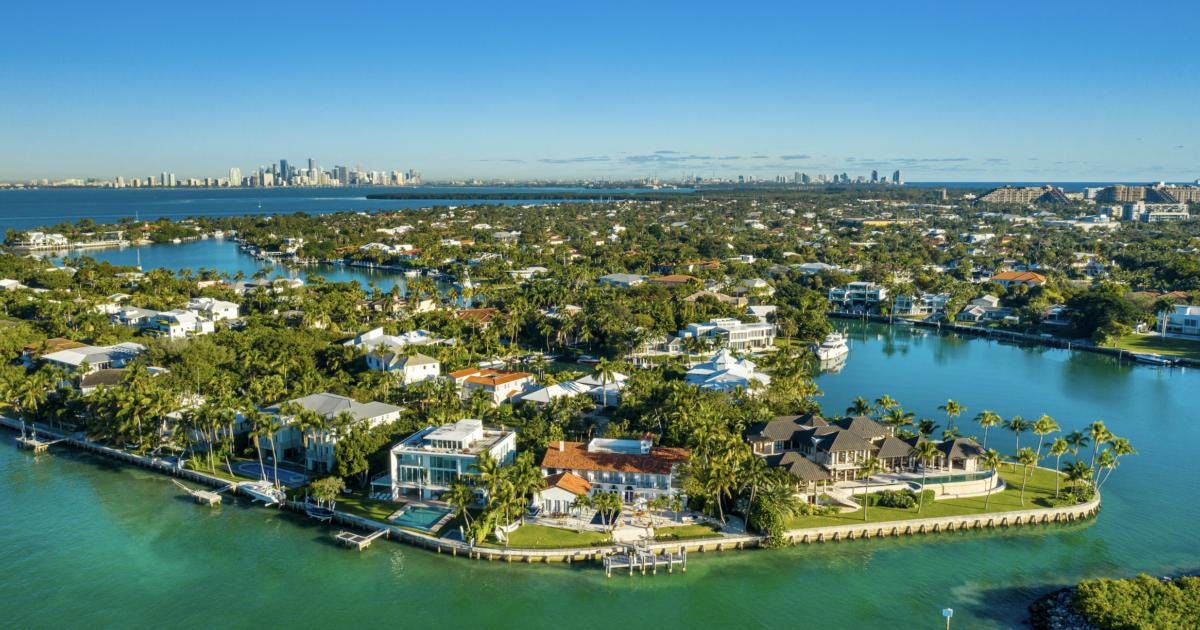
One thing I’ve learned after years selling real estate throughout Coconut Grove, Coral Gables, and the surrounding neighborhoods is that headlines rarely tell the whole story.
Real estate is hyperlocal.
The questions my clients ask aren’t “What is Miami doing?”
They’re asking:
What’s happening in North Grove?
Are buyers negotiating in Sunrise Harbour?
Is Coral Gables seeing more inventory?
Should I buy now or wait until fall?
Are waterfront homes behaving differently than interior lots?
Those are much better questions.
Because they’re the questions that actually matter.
Every neighborhood has its own supply, its own buyer pool, and its own rhythm.
Understanding those differences is far more valuable than reacting to a headline.
Final thoughts
If I had to summarize today’s market in one sentence, it would be this:
Miami isn’t slowing down. It’s becoming more selective.
The frenzy has cooled.
Buyers have more choices.
Sellers need stronger pricing strategies.
Great homes continue to sell.
And the neighborhoods with enduring fundamentals—places like Coconut Grove and Coral Gables—continue to demonstrate why they’ve remained some of Miami’s most resilient real estate markets.
The best decisions aren’t made from headlines.
They’re made by understanding what’s happening on your block.