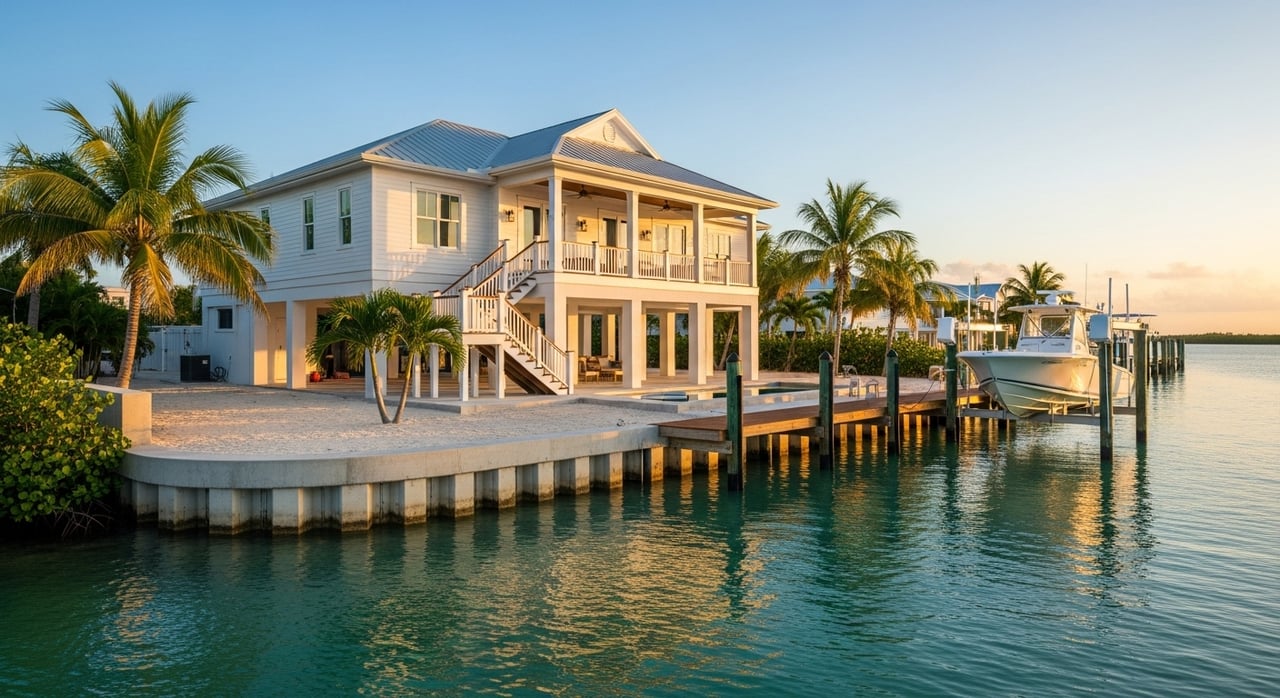
Buying on the water in the Florida Keys is exciting, but financing works a little differently here. Flood zones, a home’s elevation, and how appraisers value waterfront features all shape your loan options, timeline, and monthly costs. With a smart plan, you can move from offer to closing with confidence.
Why Keys Waterfront Financing Works Differently
Flood exposure is part of life in the Keys. The entire county is mapped in FEMA floodplains and base flood elevations vary by island and street. That affects insurance, construction rules, and how lenders underwrite your loan per Monroe County. On top of that, regional sea level projections show 10 to 17 inches of rise by 2040 and 21 to 54 inches by 2070, which is why insurers and lenders price risk carefully here according to county sustainability planning.
In short, three pillars matter most:
- Flood insurance: availability, coverage, and price drive underwriting and your monthly payment see county insurance guidance.
- Elevation: an Elevation Certificate often influences insurance cost and, at times, loan eligibility FEMA explains the EC’s role.
- Appraisal: water access, elevation, and flood compliance affect value and can change your loan-to-value and terms.
Flood Insurance Essentials for Keys Buyers
Flood insurance is central to qualifying and budgeting in the Keys. If a property sits in a FEMA Special Flood Hazard Area, regulated lenders typically require flood coverage. Many waterfront homes do.
Lender Requirements and Policy Options
- Lenders order a formal flood zone determination during underwriting. If the home is in an SFHA, they will require flood insurance that meets program rules. NFIP policies for single-family generally max at 250,000 for building and 100,000 for contents per Monroe County.
- Private flood insurance can be an option in Florida. Availability and limits vary. If you also carry a Citizens homeowners policy, be aware Citizens has specific flood requirements for many policyholders see Citizens guidance.
- Program timing matters. If the NFIP faces a federal funding lapse, new policies and renewals can pause and delay closings. Check NFIP status during your transaction as noted in recent reporting.
Estimating Premiums Without Surprises
- Get quotes early. Under NFIP’s Risk Rating 2.0, pricing reflects the property’s specific risk, including elevation and distance to water. An Elevation Certificate can help refine the quote and may reduce the premium in some cases FEMA agent guide.
- Ask for multiple scenarios. Request NFIP and private quotes with different deductibles so you understand the tradeoffs.
- Align coverage with lender needs. Your lender may require coverage equal to the loan amount up to NFIP maximums. Confirm before you bind.
Insurance, Debt-to-Income, and Approval
Flood premiums feed directly into your total monthly housing cost and debt-to-income ratio. High premiums can lower your approved price range. Build estimated flood premiums into pre-approval and revisit numbers after you receive firm quotes so your offer strategy stays realistic.
Elevation Certificates and Risk Mitigation
An Elevation Certificate is a survey-based document that shows the home’s lowest floor elevation relative to the local Base Flood Elevation. In the Keys, it is often the key to accurate insurance pricing and smoother underwriting FEMA EC overview.
Reading an Elevation Certificate
Focus on a few sections:
- Property details and flood zone from the effective FEMA map panel.
- Base Flood Elevation and the building’s lowest floor elevation.
- Foundation type and whether there is enclosed space below BFE.
- Surveyor’s certification date and datum. These fields help insurers price risk and help lenders confirm compliance with local codes and loan program rules.
Verifying and Updating During Due Diligence
- Ask the seller for the existing EC and check the date. Many local governments keep ECs on file, including the City of Key West EC records and guidance.
- If no EC exists or it is outdated for insurance rating, order a new one early. Your insurer, surveyor, and lender can coordinate what is needed.
- If the home appears to be above BFE but the map still shows it in a flood zone, discuss whether a FEMA Letter of Map Amendment or Revision could apply. These actions can change insurance requirements if approved FEMA LOMA overview.
Practical Mitigation Strategies
- Elevate utilities and critical systems above BFE where feasible.
- Use compliant enclosures below BFE for parking, access, or limited storage only, as local rules allow Monroe County building standards.
- Improve site drainage and inspect seawalls. Document upgrades for your insurer and appraiser.
- Consider higher deductibles or private options to balance premium and risk tolerance, after consulting your lender.
Appraisals on Waterfront and Canal-Front Homes
Waterfront value is not one-size-fits-all. Appraisers weigh elevation, compliance, and water access alongside condition and location. Professional standards require them to identify environmental and hazard factors that affect value, and to use comparable sales that reflect similar exposure Appraisal Institute guidance.
Choosing the Right Comparable Sales
Expect comps that match on:
- Access type: open-ocean, bay, or canal. Turning basins and bridge clearances matter to boaters.
- Exposure and risk: similar flood zones, elevation, and mitigation.
- Location nuances: island, shoreline orientation, and proximity to services. Appraisers may avoid inland comps if they do not reflect waterfront risk and amenity value. Where sales are thin, they will explain adjustments clearly.
Valuing Dockage, Seawalls, and Water Access
Dock length, draft depth, boat lift capacity, and seawall condition can swing value meaningfully. Functional, permitted dockage and solid seawalls support value. Deferred maintenance or noncompliant improvements can trigger lender conditions, higher insurance, or lower contributory value.
When the Appraisal Comes In Low
If value misses contract price:
- Provide the appraiser and lender with the EC, insurance quotes, permits, and any marine contractor reports that support condition and functionality.
- Recheck comp selection. If a better matched sale closed after inspection, your agent can request a reconsideration of value with evidence.
- Discuss options: price reduction, seller credit, second opinion through a different lender, or adjusted loan program. Keep your finance and inspection timelines in sync so you preserve contract protections.
Loan Structures and a Smooth Timeline
You will see a mix of conventional, jumbo, and portfolio loans in the Keys, especially for second homes and investment properties. Getting the sequence right keeps you on track.
Matching Loan Type to Property and Use
- Conventional and jumbo: strong fit for many second-home and investment purchases. Lenders will require flood insurance if in an SFHA and may ask for the EC before closing Fannie Mae flood determination context.
- FHA and VA: possible for primary occupancy, but FHA tightened elevation rules for new construction in SFHAs and certain coastal zones. Newly built homes may need to be at least 2 feet above BFE for FHA, with specific documentation HUD rule, Apr 23, 2024.
- Portfolio lending: useful for complex properties or timing issues. Expect conservative terms where flood exposure is high.
Pre-Approval With Insurance Built In
Bring your lender a realistic flood premium estimate at pre-approval. Use the seller’s EC or order one if needed, then ask for NFIP and private quotes to bracket the cost pricing approach reference. That way your price band reflects actual monthly payments, not guesses.
Contract-to-Close Milestones
- Week 0 to 1: Offer accepted. Order EC if needed. Request flood quotes. Schedule marine, general, and roof inspections.
- Week 1 to 2: Apply for the loan. Lender orders flood determination and appraisal. Share EC and quotes with lender and insurance agent.
- Week 2 to 3: Receive inspection reports. If mapped in SFHA and above BFE, discuss LOMA potential with your surveyor and insurer FEMA LOMC process.
- Week 3 to 4: Appraisal due. Bind flood insurance once lender clears conditions. Monitor any NFIP operational news that could affect binding or renewal timing see AP coverage.
- Final week: Clear to close. Confirm policy effective dates and premium amounts for your escrow.
Condos, HOAs, and Waterfront Buildings
Condo lending adds an extra layer: the association’s health and insurance.
Association Financials and Reserves
Lenders review budgets, reserves, insurance, and any pending assessments. In coastal buildings, seawall or dock work can mean future assessments. Read minutes and engineering reports during diligence. Strong reserves reduce risk and support loan approval.
Master Policies and Unit Coverage
Associations carry master policies for the structure. You still need unit coverage and often a separate flood policy if the building sits in an SFHA. Confirm master flood limits and your unit’s required coverage with your lender and insurance agent so your numbers pencil out see county insurance overview.
Next Steps to Confidently Finance in the Keys
With early planning, Keys waterfront deals can move smoothly. Start by confirming the flood zone and effective map panel, pulling or ordering an Elevation Certificate, and getting firm flood quotes. Align your loan type with the property’s elevation and use, then give your appraiser clean documentation on dockage, seawalls, permits, and mitigation.
If you want a personalized walkthrough of financing scenarios, property shortlists, and local lender and insurance referrals, schedule time with Guillermo Freixas. We will map your goals to a clear plan, from first showing to closing.
FAQs
Is every Keys property in a flood zone?
- Monroe County states the entire county is in mapped floodplains, with BFEs that vary by area. Always check your exact address and FEMA panel before you offer county floodplain page.
How much flood insurance do lenders require?
- If the home is in an SFHA, lenders typically require flood insurance at least equal to the loan amount up to NFIP maximums. NFIP single-family limits are generally 250,000 for building and 100,000 for contents county insurance guidance.
What is an Elevation Certificate and why does it matter?
- It shows the building’s elevation relative to the Base Flood Elevation. Insurers use it to price risk and lenders use it to verify compliance. It can lower premiums in some cases FEMA EC overview.
Can a LOMA remove the flood insurance requirement?
- If certified elevations show the structure is above BFE, a FEMA LOMA can amend mapping and may remove the mandatory insurance requirement. It requires documentation and FEMA review FEMA LOMA info.
How do new federal rules affect Keys financing?
- FHA’s 2024 rule increased elevation requirements for certain new construction in SFHAs and coastal zones. Lenders may ask for ECs or map change documents to show compliance HUD rule.
What if NFIP pauses during my closing?
- A federal lapse can halt new NFIP policies, which may delay closings that require them. Track program status and explore private flood options as a backup with your lender and agent recent AP coverage.
Do appraisals discount for flood risk?
- Many studies show flood exposure can reduce value, but impacts vary by market and property. Appraisers use local comps that reflect similar risk and amenities to support adjustments Appraisal Institute.