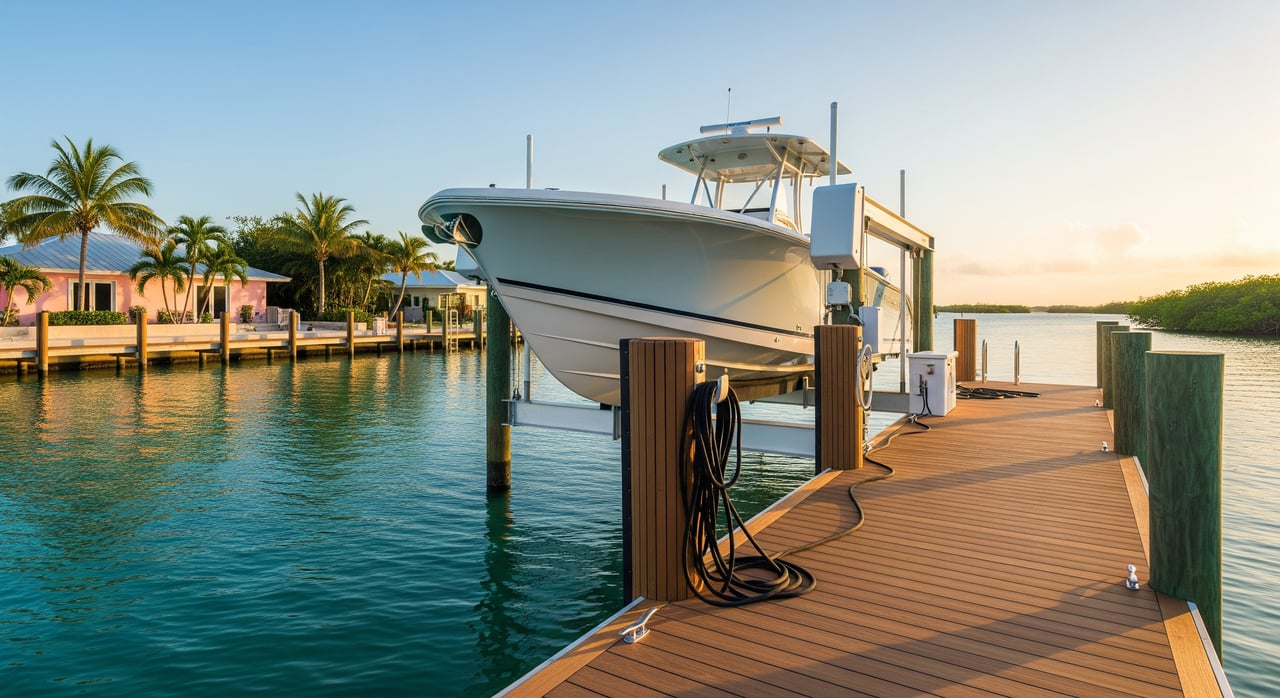
Thinking about tying your boat up at your Keys home? In Monroe County, even a simple lift or small dock touches protected waters and multiple agencies, so planning ahead matters. You want a smooth process that respects the environment and keeps your project on schedule. This starter guide gives you the essentials: who approves what, key local rules, a practical workflow, timelines, and a checklist to help you move from concept to permit with confidence. Let’s dive in.
What to expect in the Florida Keys
You will likely need approvals from the County, the State of Florida, and Federal agencies. Monroe County handles building and shoreline permits and coordinates outside reviews through its online system. You can start with the County’s permitting page to understand local steps and portal access. Monroe County Building & Permitting
At the state level, the Florida Department of Environmental Protection (DEP) issues Environmental Resource Permits and offers a self‑certification path for many single‑family docks, including boat lifts, when strict limits are met. DEP ERP e‑Permitting and self‑certification
Federally, the Florida Keys National Marine Sanctuary (FKNMS) and the U.S. Army Corps of Engineers (USACE) review most nearshore construction. FKNMS publishes nearshore construction guidance and timelines, and USACE handles Section 10 and Section 404 work authorizations. FKNMS nearshore construction guidance | USACE Jacksonville regulatory info
Key Monroe County rules to know
Monroe County’s Land Development Code sets project‑specific standards for docks and lifts. Expect the County to confirm lot geometry, shoreline setbacks, and waterbody width before finalizing plans. Monroe County LDC Chapter 118
- Side setbacks for lifts: elevator lifts generally need at least 7.5 feet from side property lines; small PWC lifts can be 5 feet. Floating lifts often have a 10‑foot lateral setback and 5‑foot perpendicular clearance requirements.
- Navigational preemption: docks cannot preempt more than 25% of the navigable width of the waterbody. In many contexts, dock width is tied to a percentage of waterbody width, commonly 10%.
- Depth and benthic resources: where seagrass or hardbottom is present, terminal platforms are often required to be at least 4 feet above the top of seagrass or corals at mean low water, and a benthic survey is commonly required.
- Construction features: expect requirements for secure tie‑downs for lifts and limits on utilities at docks in residential settings.
State approvals and when self‑cert works
Florida DEP regulates docks and lifts through its ERP program. Many single‑family projects qualify for DEP’s online self‑certification, which can be faster if your design meets size, setback, and location limits. Start by reviewing the ERP e‑Permitting page, then confirm whether the general permit criteria fit your design. DEP ERP e‑Permitting
For technical details on general permits, review Florida Administrative Code 62‑330.427. It outlines allowable dock dimensions, setback conditions, and limits that often apply to single‑family projects. FAC 62‑330.427 general permits
If your dock or lift preempts state‑owned submerged lands waterward of mean high water, you may also need a submerged‑lands lease or easement through DEP’s Division of State Lands. The lease process usually follows ERP approval. Submerged Lands Management
Federal reviews in the Keys
FKNMS requires a permit or authorization for nearshore construction that could affect sanctuary resources. Plan for a complete submission with plans, any state approval or self‑cert verification, and a benthic survey if needed. FKNMS commonly asks for 90 to 120 days for review depending on permit type. FKNMS nearshore construction guidance
USACE regulates structures in navigable waters and dredge or fill work. Some projects may proceed under general permits, while others need individual permits and public notice. Timelines vary with scope and complexity. USACE Jacksonville regulatory info
A practical step‑by‑step plan
1) Evaluate the site
Confirm your upland boundary, measure waterbody width, and note any visible seagrass or hardbottom. If benthic resources may be present, plan to hire a biologist for a survey.
2) Draft a concept plan
Work with your contractor or engineer to sketch dimensions, pile locations, lift type, and clearances. Align early with Monroe County setbacks and preemption limits. LDC Chapter 118 reference
3) Check DEP self‑cert eligibility
If your design fits the general permit criteria, use DEP’s self‑certification path. If not, prepare a full ERP application. DEP ERP e‑Permitting
4) Submit DEP and then County
Obtain DEP verification or permit, then submit to Monroe County for building and shoreline approvals through the online portal. Monroe County permitting portal
5) Address submerged‑lands leasing
If the project preempts sovereignty submerged lands, coordinate the lease or easement through the Division of State Lands after ERP approval. Submerged Lands Management
6) Coordinate FKNMS and USACE
Submit complete packages to FKNMS and USACE as required. FKNMS will not queue incomplete submissions. FKNMS nearshore construction guidance
7) Plan construction sequencing
Once all approvals are in hand, coordinate contractor schedules and any special protection measures for seagrass or corals noted in your permits.
How long does permitting take
- DEP self‑certification: often days to a few weeks when clearly eligible. DEP ERP e‑Permitting
- Full DEP ERP review: several weeks to months depending on complexity.
- FKNMS review: commonly 90 to 120 days for nearshore authorizations. FKNMS guidance
- USACE: varies. General permits are typically faster than individual permits.
- Submerged‑lands leases: allow a few weeks for processing after ERP approval.
Build in contingency for benthic surveys, design adjustments, inter‑agency coordination, and seasonal workloads.
Quick Keys checklist
- Confirm property lines and waterbody width. This sets your maximum dock size and helps you stay within the 25% navigational preemption limit.
- Review County setbacks and lift placement. Plan for side setbacks like 7.5 feet for elevator lifts and consider floating lift clearances.
- Commission a benthic survey if seagrass or hardbottom may be present. It is often required and can shape your design.
- Check DEP self‑cert first. If your project fits, it can save time compared with a full ERP. DEP ERP e‑Permitting
- Confirm submerged‑lands leasing needs. If you preempt state lands, budget time and fees for a lease. Submerged Lands Management
- Review sanctuary and wildlife zones. Check FKNMS zones and state manatee maps to avoid restricted areas. FKNMS zones | FWC manatee zones
- Contact Monroe County early. Register in the portal and consider a pre‑application chat to confirm expectations. Monroe County permitting portal
- Note local markers and speed zones. County waterway markers and restricted zones can affect access and work windows. Waterway markers
- Budget time and cushion. Plan for months, not weeks, especially if multiple agencies or leases are involved.
Common pitfalls that slow projects
- Submitting incomplete packages. FKNMS will not queue projects without plans, state approval or self‑cert verification, and any required benthic survey. FKNMS nearshore construction guidance
- Assuming no state lease is needed. Many projects do preempt sovereignty submerged lands, which triggers lease processing and fees.
- Designing over seagrass or hardbottom. Avoiding benthic resources is usually the fastest path to approval.
- Overlooking local markers or manatee zones. These can restrict construction or lift locations and may prompt redesigns.
Final take
You can permit a dock or boat lift in the Florida Keys with less stress when you confirm site constraints early, use DEP self‑certification when eligible, and submit complete packages to every agency. Start conversations with Monroe County and DEP early, plan for FKNMS and USACE timing, and design to minimize impacts on seagrass and navigation.
If you are weighing waterfront purchase decisions or planning improvements for resale, let’s talk strategy. For neighborhood‑savvy guidance on Keys waterfront homes and timelines, connect with Guillermo Freixas.
FAQs
Do I always need a Florida DEP permit to add a boat lift in the Florida Keys
- Many single‑family projects can use DEP’s self‑certification if they meet general permit limits; otherwise you will need a full ERP.
What is a submerged‑lands lease and when is it required in Monroe County
- If your dock or lift preempts state‑owned submerged lands waterward of mean high water, DEP’s Division of State Lands typically requires a lease or easement.
How long should I budget for permits for a dock or lift in Monroe County
- Plan for months overall: DEP self‑cert can be days to weeks, while full DEP, USACE, and FKNMS reviews often run several weeks to many months.
Can I place a boat lift where there is seagrass or hardbottom in the Florida Keys
- Work over seagrass or hardbottom is highly constrained, often requires a benthic survey and clearances, and may require redesign, mitigation, or denial.
Will my Monroe County dock application trigger neighbor notice or public comment
- Some projects, especially those needing USACE individual permits or increasing navigational preemption, may require public notice during review.